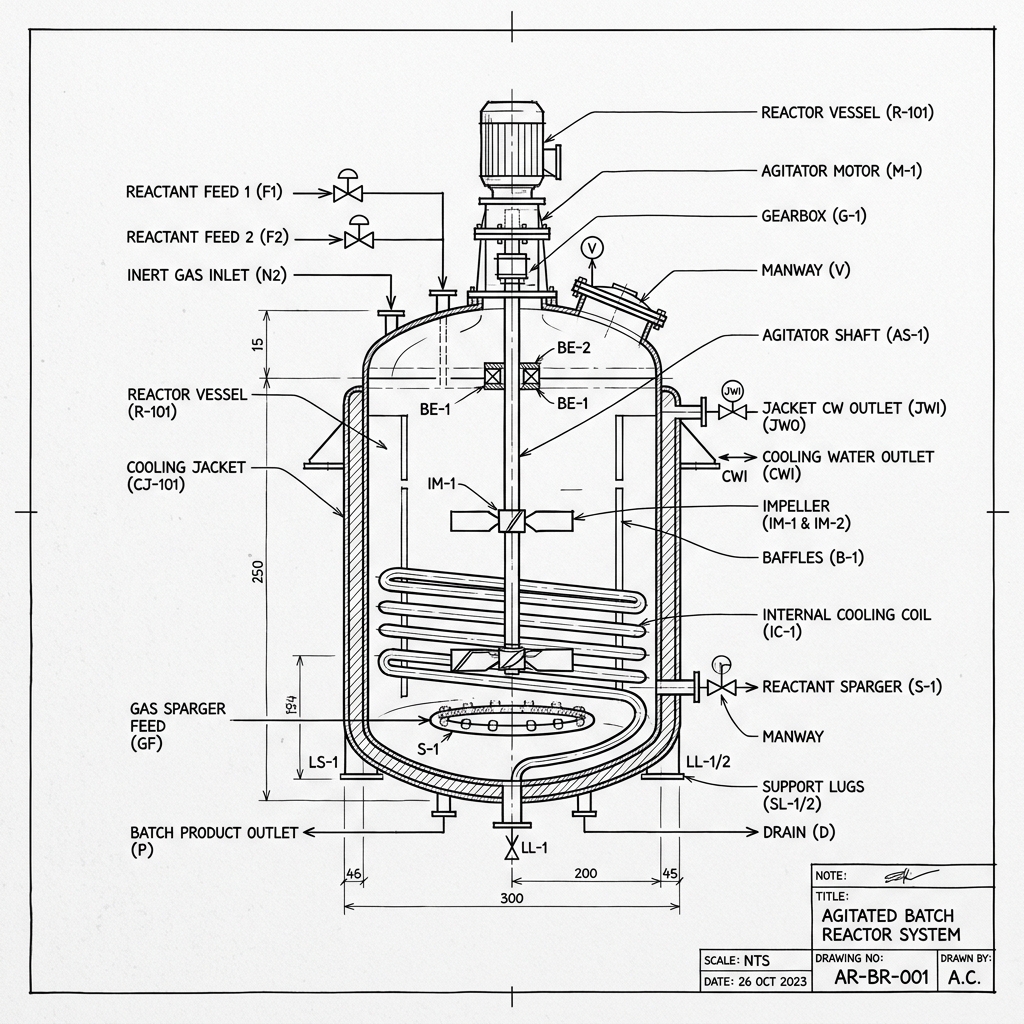
Designing Safe Exothermic Reactors: Temperature Control Philosophy
Exothermic chemical reactors must be designed with layers of protection to handle runaway scenarios. If a reactor cooling control loop fails, the process must have independent safety systems to prevent vessel overpressurization, rupture, or thermal explosion.
1. Jacket Thermal Design Sizing
To maintain stable reactor control, the heat removal capacity of the jacket must exceed the maximum reaction rate heat release (Q_rxn):
Q_cooling >= Q_rxn
U * A * LMTD >= delta_H_r * r_rxn
Where:
- U = Overall heat transfer coefficient (W/m²K)
- A = Wetted jacket area (m²)
- LMTD = Log Mean Temperature Difference between jacket fluid and reactor mixture
- r_rxn = Reaction rate (mol/s)
Engineers must calculate wetted heat transfer area at minimum reactor liquid levels to ensure cooling is active before reagent dosing begins.
2. Independent Safety Layers
A safe reactor design incorporates three levels of thermal protection:
- Safety Instrumented System (SIS) Interlocks: Independent temperature sensors detect when T exceeds a high limit, triggering a closed-loop shutdown—stopping feed pumps and opening the jacket cooling valve to maximum (fail-open).
- Emergency Quench / Dump Systems: High-pressure inert gas (nitrogen) dumps a chemical inhibitor or cold quenching solvent directly into the reactor to kill the reaction kinetics.
- Pressure Relief Systems: Rupture discs or pressure safety valves (PSVs) sized for two-phase runaway venting based on DIERS methodologies.
3. Reference Standards Used
- IEC 61511: Functional Safety - Safety Instrumented Systems for the Process Industry Sector.
- CCPS Guidelines for Safe Automation of Chemical Processes: Process automation safety layers.
- API RP 521: Guide for Pressure-relieving and Depressuring Systems.